
Below is a helpful tip from the Davis-Stirling.com Newsletter by ADAMS | STIRLING PLC regarding a barbeque fire that burned down a condo complex in a HOA community . . .
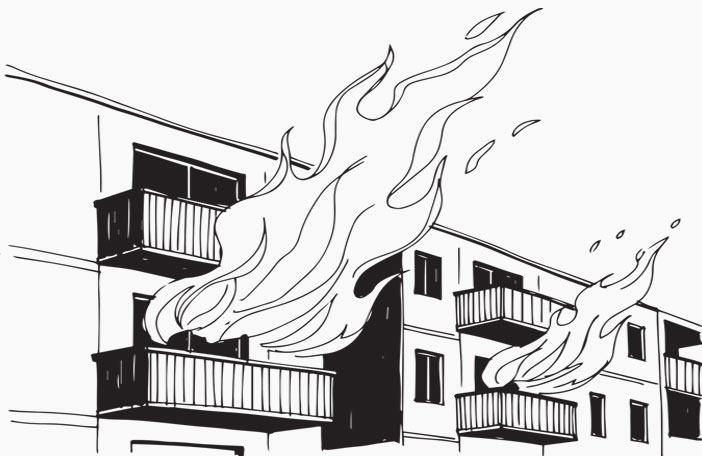
A propane barbecue on a first-floor patio sparked a 6-alarm fire that destroyed a 51-unit condo complex, injured firefighters, and displaced more than 150 people. Residents were not allowed into what remained of the building for fear of a total building collapse..
A resident was using a propane barbecue and allegedly left it unattended. He was later arrested by the police. This should be a wake-up call for condominium associations throughout California.
STATISTICS. For the years 2020 to 2024, the National Fire Protection Association reported that fires caused by grills, hibachis, and barbecues averaged 12,141 annually. The fires caused 15 deaths, 171 injuries, and $241 million in property damage, with gas grills involved in 76% of the fires.
FIRE CODES. California Fire Codes prohibit open-flame cooking devices on combustible balconies and within 10 feet of combustible surfaces at residential buildings with more than 2 dwelling units. In addition, propane containers with a capacity greater than 1 pound cannot be transported through enclosed common-area stairs, hallways, or elevators. They must be transported into the unit through an exterior stairway.
INSURANCE. I asked insurance specialist Michael Berg, a VP with Labarre Oksnee, about the fire. An owner’s personal condo insurance (HO-6) likely covers accidental cooking-fire damage to their unit, but coverage may be denied if the barbecue violated fire codes or the association’s rules. The association’s master insurance policy may be compromised if if it allowed owners to have open-flame barbecues on their balconies in violation of fire codes or failed to enforce rules that prohibited them. Prohibiting open-flame cooking equipment on balconies would likely be a condition for renewing an association’s insurance policy.
RULES & REGULATIONS. Boards of directors should amend their rules to prohibit open-flame devices on all balconies and either prohibit or strictly regulate them on ground-floor decks. This will protect the HOA in the event of a fire and in response to questions from the carrier regarding loss control practices. Once adopted, boards must enforce the restriction. Lack of enforcement could become a liability in the event of a fire. If a resident with a barbecue grill on his balcony starts a fire that spreads to neighboring units, the neighbors will likely sue the association for negligence and breach of fiduciary duties for failing to enforce its rules.
LITIGATION. I recently testified as an expert in a case where an association sued an owner to compel him to remove an unapproved brick barbecue on his patio that was built against the wall of the building with a bootlegged natural gas line and unsafe electrical wiring. The association prevailed, and the owner was ordered to remove it.
RECOMMENDATION: When an owner creates a safety hazard and refuses to correct it, boards should be willing to go to the mat to protect the membership.
DISCLAIMER. The Davis-Stirling.com Newsletter by ADAMS | STIRLING PLC provides commentary only, not legal advice. For legal advice, you’ll need to hire legal counsel. You can hire ADAMS | STIRLING PLC; Keep in mind they are considered corporate counsel to associations only.
